
Table of Contents
Toggle
Jewellery in India is not just fashion—it is a tradition, an investment, and an expression of identity. From grand bridal sets that define weddings to everyday earrings passed down through generations, jewellery has always held a deep emotional value.
But in 2025, jewellery is not just about beauty and status. It is also about responsibility, trust, and sustainability. Today’s buyers ask:
Is this jewellery harming the environment?
Were the workers treated fairly?
Can I trust this brand to be honest and transparent?
The answer lies in sustainable jewellery—a movement transforming the jewellery industry across the globe, including India. In this complete guide, we’ll explore every aspect of sustainable jewellery, from its history to its future, so you can build authority, trust, and expertise in this space.
Chapter 1: Understanding Sustainable Jewellery
1.1 What is Sustainable Jewellery?
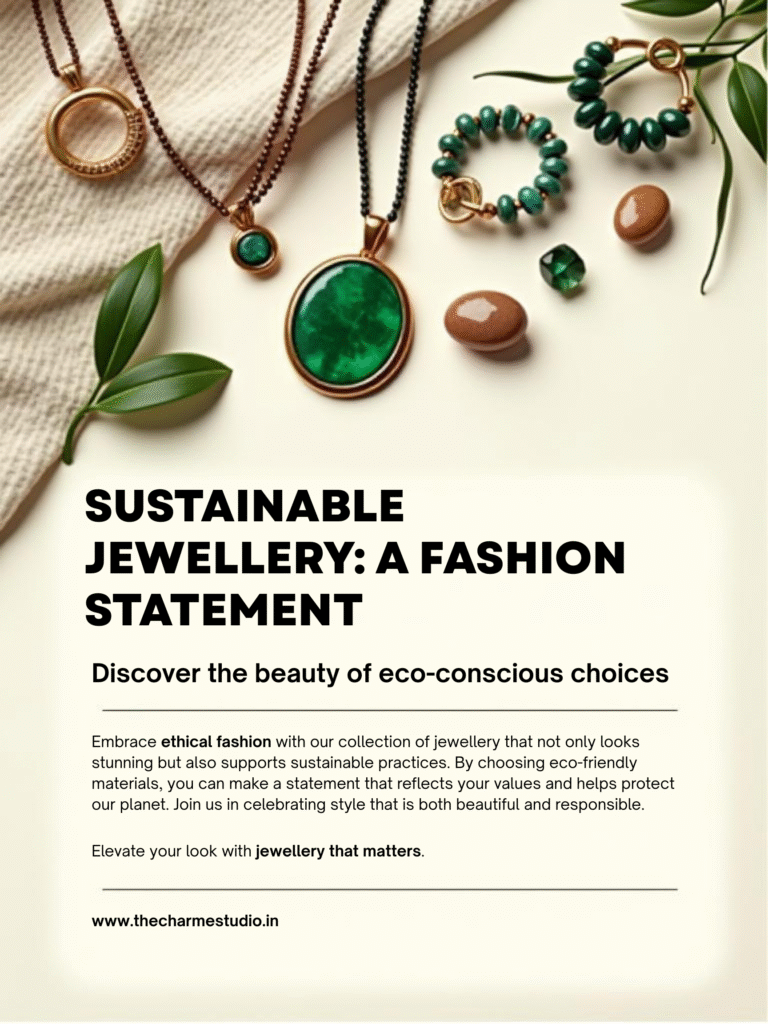
Sustainable jewellery refers to ornaments designed and produced with eco-friendly materials, ethical practices, and social responsibility. It is about reducing harm to people and the planet while preserving beauty and tradition.
Key features:
Eco-friendly metals (recycled gold, silver, platinum).
Lab-grown diamonds and ethical gemstones.
Fair labour practices ensuring artisans are respected.
Low-waste processes and eco-friendly packaging.
Timeless designs that last for generations.
1.2 Why Sustainability Matters in Jewellery
The jewellery industry faces challenges:
Mining destroys ecosystems.
Gemstone sourcing is often linked to conflict and exploitation.
Mass production creates waste and overconsumption.
By adopting sustainable jewellery, we preserve natural resources, uplift workers, and create a trustworthy industry.
Chapter 2: The History of Sustainable Jewellery
2.1 Ancient India’s Jewellery Traditions
India’s jewellery heritage has always included sustainable practices. Gold and silver were often recycled, and family heirlooms passed down for generations ensured minimal waste. Temple jewellery, for example, was crafted to last centuries.
2.2 Global Influence
In the West, awareness grew in the 1990s with the exposure of “blood diamonds” funding wars in Africa. This sparked demand for conflict-free diamonds and fair-trade gemstones.
2.3 The Modern Movement
By 2010s–2020s, eco-conscious Millennials and Gen Z began driving demand for sustainable fashion and jewellery. Now in 2025, it is not a niche—it’s becoming the mainstream.
Chapter 3: Materials in Sustainable Jewellery
3.1 Recycled Gold & Silver
Instead of mining, jewellers refine old jewellery, coins, and electronics. Recycled metals look identical to newly mined ones but reduce environmental damage.
3.2 Lab-Grown Diamonds
Identical to natural diamonds in beauty and structure.
Cost 30–40% less.
Produced ethically without harmful mining.
In India, lab-grown diamonds are trending for engagement rings and bridal sets.
3.3 Conflict-Free Gemstones
Customers now prefer gemstones that are:
Fair-trade certified.
Mined without exploitation.
Sourced with transparency.
3.4 Alternative Materials
Bamboo, wood, and shells (eco-friendly fashion jewellery).
Recycled glass beads.
Vegan leather cords.
Chapter 4: Sustainable Jewellery in the Indian Market
4.1 Why India is Important
India is one of the world’s largest jewellery consumers, especially for weddings and festivals. A shift toward sustainable jewellery here has a global impact.
4.2 Consumer Trends in India
Millennials & Gen Z prefer conscious consumption.
Working women want lightweight, everyday jewellery.
Brides are asking for lab-grown diamond bridal sets.
4.3 Indian Brands Embracing Sustainability
Tanishq – Hallmarking & recycled gold initiatives.
CaratLane – Minimalist designs and transparency.
Reliance Jewels – Experimenting with lab-grown diamonds.
Independent designers – Supporting artisans and handmade crafts.
Chapter 5: Building Authority, Trust & Expertise
5.1 Transparency Builds Trust
Share sourcing details openly.
Provide certifications (BIS, IGI, GIA).
5.2 Education Builds Expertise
Publish blogs explaining lab-grown vs natural diamonds.
Host workshops on jewellery care and sustainability.
5.3 Social Proof Builds Authority
Showcase customer reviews.
Use influencers who support sustainability.
5.4 Community Engagement
Collaborate with artisans.
Support eco-friendly causes.
Chapter 6: Styling with Sustainable Jewellery
6.1 Everyday Looks
Recycled gold studs for office wear.
Minimalist lab-grown diamond pendants.
6.2 Wedding Looks
Eco-friendly Polki & Kundan sets.
Lab-grown diamond bridal jewellery.
6.3 Festive Looks
Ethical gemstone bangles for Diwali.
Lightweight recycled silver anklets for Navratri.
6.4 Fusion Looks
Mix traditional designs with modern sustainable jewellery.
Chapter 7: Buying Guide for Sustainable Jewellery
7.1 Checklist Before You Buy
Certifications (BIS, Fairtrade, GIA).
Brand transparency.
Recycling programs.
Eco-friendly packaging.
7.2 Questions to Ask the Jeweller
Where was this metal/stone sourced?
Is it lab-grown or mined?
Do you offer lifetime recycling or repair?
7.3 Red Flags (Greenwashing Signs)
Vague claims like “eco-friendly” without proof.
No hallmark or certification.
Plastic-heavy packaging.
Chapter 8: Future of Sustainable Jewellery (2030 Vision)
AI and blockchain for complete transparency in supply chains.
Circular economy – jewellery that can be returned, recycled, and resold.
Smart jewellery – blending technology with sustainable materials.
Eco-conscious brides leading the biggest jewellery purchases in India.
Chapter 9: Case Studies
9.1 Global Brands
Brilliant Earth (USA) – Leading lab-grown diamond brand.
Pandora (Europe) – Fully committed to recycled metals.
9.2 Indian Success Stories
Jaipur artisans making ethical gemstone jewellery.
New Delhi designers offering recycled gold fashion lines.
Chapter 10: Emotional Connection: Jewellery Beyond Fashion
Why jewellery is more than an accessory in Indian culture.
Stories of heirlooms passed down through generations.
How sustainable jewellery ensures future generations inherit pieces with pride.
Chapter 11: Sustainability vs. Traditional Jewellery: A Comparison Table
| Factor | Traditional Jewellery (Mined) | Sustainable Jewellery |
|---|---|---|
| Environmental Impact | High (mining, deforestation) | Low (recycled metals, lab-grown diamonds) |
| Cost | Expensive due to mining | Affordable (lab-grown) |
| Longevity | High | High |
| Ethical Concerns | Child labour, unsafe mining | Fair labour, artisan support |
| Consumer Trust | Limited transparency | Full transparency, certifications |
Chapter 12: Care & Maintenance Tips for Sustainable Jewellery
Store lab-grown diamonds separately to avoid scratches.
Clean recycled gold with mild soap instead of harsh chemicals.
Avoid plastic storage—use eco-friendly pouches.
Get jewellery polished only from certified jewellers to preserve sustainability claims.
Chapter 13: Sustainable Jewellery as an Investment
How gold recycling reduces costs but retains resale value.
Why lab-grown diamonds are gaining resale market in India.
Jewellery buy-back and exchange policies offered by eco-conscious brands.
Growth predictions for the lab-grown diamond industry in India (expected $5 billion by 2030).
Chapter 14: Consumer Psychology in India
70% of Indian Gen Z buyers prefer brands with sustainability values.
Women aged 25–40 are the largest buyers of lab-grown diamond engagement rings.
Tier 1 cities (Delhi, Mumbai, Bangalore) are leading sustainable jewellery adoption.
Chapter 15: Sustainable Jewellery & Indian Weddings
Brides are opting for lighter, eco-friendly bridal sets.
Demand for heritage-inspired designs with recycled gold.
Families prefer jewellery that’s both an investment and ethically sourced.
Example: Many brides now choose a mix of traditional Kundan + lab-grown diamonds for eco-luxury.
Chapter 16: The Role of Technology in Sustainable Jewellery
Blockchain tracking ensures transparency in sourcing.
AI-driven certifications verify lab-grown diamonds.
3D printing helps reduce waste in jewellery design.
Augmented reality (AR) apps let buyers try sustainable jewellery virtually.
Chapter 17: Future Trends (India 2030 Outlook)
Government may mandate eco-certifications for all major jewellers.
Circular jewellery economy – old pieces will be exchanged, melted, and redesigned.
Personalized jewellery will dominate—eco-conscious buyers want unique designs.
Rise of regional artisan clusters supported by sustainable fashion brands.

Q1. Is sustainable jewellery more expensive?
Not always. Lab-grown diamonds are cheaper, recycled metals reduce costs, and artisan jewellery offers value for money.
Q2. Can traditional Indian jewellery be sustainable?
Yes. Kundan, Polki, and temple jewellery can be crafted with recycled gold and ethical gemstones.
Q3. How do I know if a diamond is lab-grown?
Check for certification (IGI, GIA) that confirms lab-grown origin.
Q4. Does sustainable jewellery last long?
Yes, when crafted with quality materials, it lasts generations.
Q5. How do brands prove sustainability?
By showing certifications, offering recycling, and being transparent in supply chains.
Q6. Can I recycle my old jewellery into new sustainable designs?
Yes, many brands offer buy-back and redesign services, turning old jewellery into new eco-friendly pieces.
Q7. Are lab-grown diamonds durable?
Absolutely. They are physically and chemically identical to natural diamonds, scoring 10/10 on the Mohs hardness scale.
Q8. How do I verify if a brand is truly sustainable?
Check for certifications, detailed sourcing information, and customer reviews. Brands that are transparent won’t hide their processes.
Q9. Do Indian jewellers offer sustainable bridal jewellery?
Yes, leading jewellers like Tanishq and independent designers now offer eco-friendly bridal collections.
Q10. Will sustainable jewellery replace traditional mined jewellery?
Not completely—heritage pieces will still exist. But lab-grown diamonds and recycled metals are set to dominate future markets.

The world of jewellery is changing—and India is at the heart of this transformation. Sustainable jewellery is no longer an option; it is the future.
For consumers, it means choosing ornaments that are not only beautiful but also ethical and eco-friendly. For businesses, it is a chance to build authority, trust, and expertise by aligning with sustainability.
From lab-grown diamonds to recycled gold and artisan crafts, sustainable jewellery combines tradition with innovation. It ensures that every piece tells a story—not just of luxury, but of responsibility.
As we move toward 2030, sustainable jewellery will define how India—and the world—celebrates love, culture, and identity.